The CEO Who Wanted More Challenge but Always Spoke First
Daniel had been leading the company for almost nine years. During that time, the organisation had grown from a regional technology business into an international company operating across several European markets. Revenue had increased steadily, employee engagement scores remained consistently high, and executive turnover was remarkably low. People described him as thoughtful, approachable, and intellectually curious. Unlike many founders, he actively encouraged discussion, admitted when he did not know something, and regularly asked people to challenge his thinking. By almost every conventional measure, he had created the kind of leadership culture many organisations were still trying to build.
Yet that was precisely why his question surprised me.
“I don’t understand what’s changed,” he said. “Five years ago, our strategy meetings felt energising. People challenged one another, ideas bounced around the room, and we often left with perspectives none of us had expected when we walked in. Now the conversations feel… flatter.”
He paused for a moment before continuing.
“The discussions are still good. People contribute. Nobody is afraid to speak. But somehow we’ve stopped surprising each other.”
What made the situation particularly interesting was the absence of obvious dysfunction. There was no political conflict within the executive team. Nobody dominated discussions. The leadership group trusted one another, openly shared information, and collaborated effectively across functions. The company continued delivering strong financial performance, customers remained loyal, and execution was rarely a problem. If someone had observed one of their meetings, they would probably have concluded that this was exactly how healthy executive teams should operate.
And yet Daniel sensed something had changed long before he could explain what it was.
“We’re becoming predictable,” he said. “Every strategic conversation seems to end where I expected it would.”
As we explored recent meetings, I resisted the temptation to analyse the discussions themselves. Instead, I became curious about something much simpler.
“Walk me through the first five minutes of a typical strategy meeting.”
He looked slightly puzzled by the question.
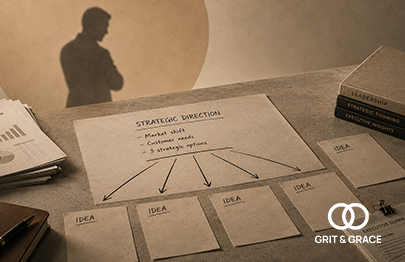
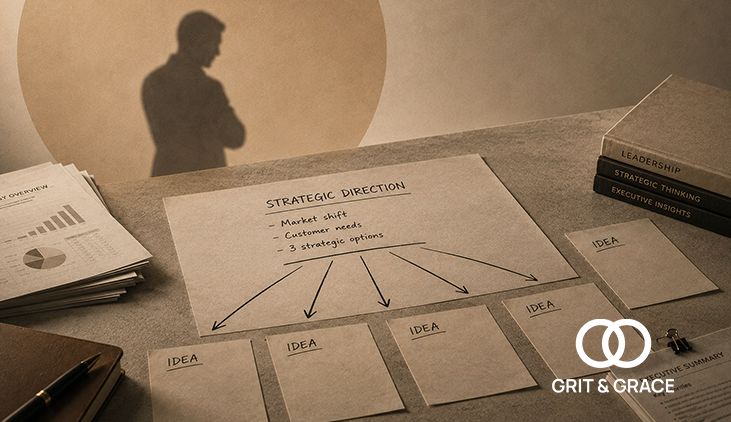
“I usually introduce the topic,” he replied. “I explain why I think it matters, summarise what’s happening in the market, outline two or three directions I believe we should consider, then I ask everyone what they think.”
It sounded entirely reasonable. In fact, it sounded like exactly what most experienced CEOs would do.
“So after you’ve introduced your thinking, I asked, who usually speaks first? Our CFO. And after that? Usually the COO. And how often does somebody introduce an idea that wasn’t already mentioned in your opening? Daniel stopped. I’m… not sure.
Rather than answering immediately, we reviewed notes from several executive meetings. The pattern appeared with surprising consistency. Daniel opened each discussion by framing the issue thoughtfully and intelligently. He summarised the market context, identified the opportunities he considered most important, and outlined several possible strategic directions. The executive team then reacted to his thinking. Sometimes they expanded it. Occasionally they challenged individual assumptions. More often, however, they refined ideas that were already present in the room. Very rarely did someone introduce an entirely different perspective.
The insight did not arrive immediately.
“So they’re agreeing with me?” Daniel asked.
“I don’t think that’s what’s happening,” I replied.
“What do you think is happening?”
I asked him another question instead.
“If I asked everyone to spend five minutes writing down their own answer before anybody spoke, how different do you think the conversation would become?”
He leaned back in his chair.
“Probably… quite different.”
“Why?”
“Because they would think first.”
Exactly.
The issue had never been whether people felt safe disagreeing with the CEO. They did. The issue was that they were rarely given the opportunity to develop an independent point of view before the CEO unintentionally anchored the discussion.
Psychologists have studied this phenomenon for decades. The first idea introduced into a discussion often becomes the reference point against which every subsequent idea is unconsciously evaluated. Even highly experienced decision-makers are influenced by the initial frame, not because they lack independence, but because human thinking naturally develops in relation to existing information. By presenting his own perspective first, Daniel was not controlling the conversation. He was narrowing the cognitive space in which the conversation could evolve.
The irony was impossible to ignore. The very behaviour Daniel believed encouraged discussion was quietly limiting it.
The following month Daniel experimented with a simple change. Rather than introducing his own perspective, he opened strategy meetings with the business question itself. Executive team members spent several minutes writing independently before the discussion began. Only after everyone had shared their initial thinking did Daniel contribute his own observations.
He later described the difference as surprisingly significant. Ideas appeared that had never surfaced before. Assumptions were challenged earlier. Several executives admitted that they had previously found themselves unconsciously evaluating their own thoughts against Daniel’s opening remarks before deciding whether to voice them.
Daniel had entered coaching believing he needed to encourage more challenge. He left recognising that his team had never lacked the confidence to disagree. They had simply been given too little opportunity to think independently before the conversation already had a direction.