BlogBLOG BlogBLOG BlogBLOG BlogBLOG BlogBLOG BlogBLOG BlogBLOG BlogBLOG BlogBLOG BlogBLOG

This blog is where boardroom lessons meet real leadership challenges. Each month I tackle the questions leaders face most. From building trust and sharpening strategy to turning setbacks into growth. Expect sharp reflections, practical tools, and stories you can use to lead with more clarity, courage, and momentum.

Subscribe Now
Strategy
7 min read

The Missing Process Behind Better Strategic Thinking

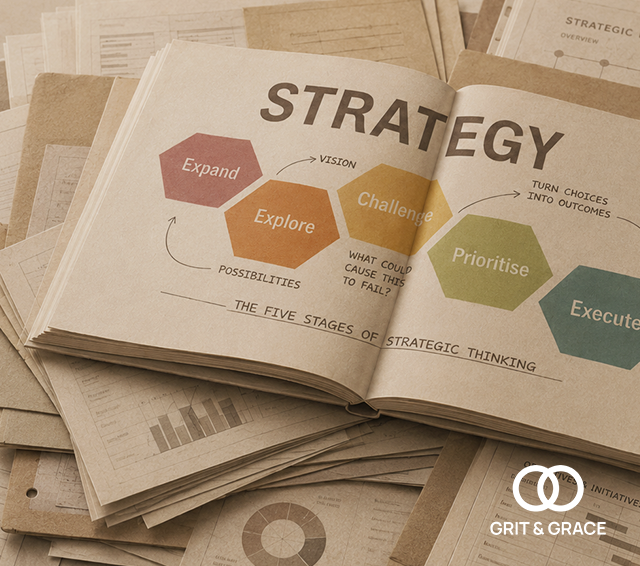
Strategy brainstorming sessions produce detailed plans without generating meaningful strategic insight. Let’s explore why strategic conversations often become operational conversations, the difference between divergent and convergent thinking, the five stages of strategic thinking, and the role leaders play in protecting the process long enough for better ideas to emerge.

Read More
Innovation
9 min read

Why Smart Teams Stop Thinking Boldly

Many leaders assume innovation slows because organisations become complacent or bureaucratic. More often, the problem is behavioural. Ideas, risks, and opportunities are still noticed, but fewer make it into decision-making conversations. Let’s explore what former innovation leaders such as Kodak, Nokia, and Blockbuster can teach us about the behavioural dynamics that make it or break it.

Read More
Coaching Cases
5 min read

Seeing the Report Is Not the Same as Understanding It

A senior leader comes into a coaching session with his Lumina Spark portrait already reviewed with HR, where the conclusions seemed straightforward and the development areas were clear. As we began to work through the profile together, a different picture started to emerge, one that had been visible in the data all along but had not yet been interpreted, and what followed was not a new assessment, but a deeper decoding of the same one and an immediate shift in how the leader understood his own behaviour.

Read More
Career
9 min read

Most Leadership Assessments Don’t Fail at Measurement. They Fail at Meaning.

The leadership industry has built a sophisticated ecosystem of assessments. From behavioural models to cognitive testing, organisations can now measure almost every dimension of human capability. On paper, this should eliminate blind spots. In practice, it often multiplies them. The issue is not complexity. It is fragmentation. Each tool captures a different slice of reality, yet few leaders are trained to integrate these perspectives into a coherent view of performance.

Read More
Coaching Cases
7 min read

When Opportunity Arising From Conflict Is Not Being Used

In this organisational coaching session I led for my client, a leadership team gathers for a board meeting expected to focus on business performance. What unfolds instead reveals a deeper dynamic: authority that is formally assigned but informally overridden, conflict that surfaces but is never resolved, and trust that cannot fully develop. What appears to be a governance issue is, in reality, a systemic breakdown across psychological safety, trust, and leadership role clarity.

Read More
Blog

Svetlana Gaidukova is an executive coach with a background most leaders don’t expect — a professional athlete, Stockholm School of Economics alum, and former FinTech CEO. She has led turnarounds, sat in boardrooms where silence killed ideas, and worked with more than 500 leaders facing pressure at the top.

Her coaching approach, the Grit & Grace Method, is built from those arenas: the discipline of sport, the demands of business, and the human side of coaching. She writes about what really happens when strategy meets execution, and what leaders can do when blind spots and unspoken tensions hold teams back.

Learn More
Blog

Categories

Choose the topic that fits your challenge. Every section translates tough situations into clear steps you can apply immediately.

Why Strategy Sessions Quietly Fail
Strategy
7 min read

Why Strategy Sessions Quietly Fail

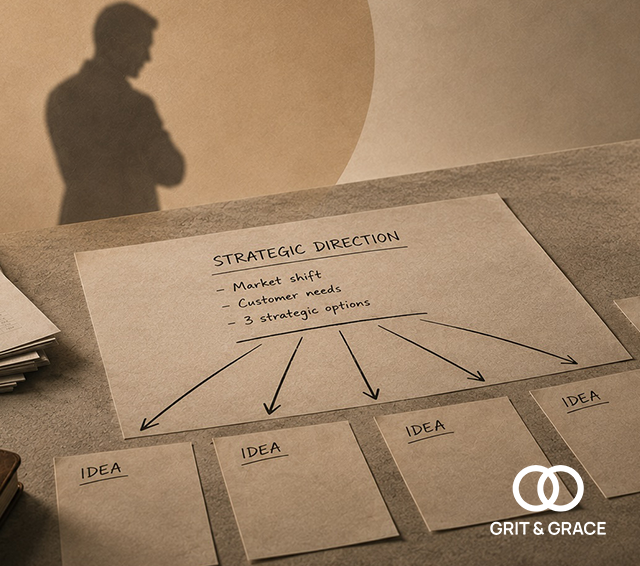
Most leadership teams do not struggle because they lack ideas. They struggle because they move too quickly from possibility to execution. The result is a familiar paradox: productive meetings that generate action plans but very little new thinking.

Read More
Why Smart Teams Stop Thinking Boldly
Innovation
9 min read

Why Smart Teams Stop Thinking Boldly

Most organisations do not become less innovative because they run out of smart people. They become less innovative because smart people learn which ideas are welcome, which questions are risky, and which assumptions should not be challenged.

Read More
When Assessment Report Insight Finally Lands
Coaching Cases
5 min read

When Assessment Report Insight Finally Lands

Leadership assessments often provide detailed reports, yet the most important insight remains hidden in plain sight. This coaching case explores how a senior executive revisited his Lumina Spark portrait and discovered a blind spot that had gone unnoticed until it…

Read More
Skill Gap Analysis: The Tools Leaders Use — And Why Most Get It Wrong
Career
9 min read

Skill Gap Analysis: The Tools Leaders Use — And Why Most Get It Wrong

Organisations today are not short of data. Personality reports, competency frameworks, 360 feedback, cognitive scores… Skill gap analysis rarely fails because tools are inadequate. It fails because leaders mistake description for understanding, and understanding for action.

Read More
When Leadership Is Present – But Not Enacted 
Coaching Cases
7 min read

When Leadership Is Present – But Not Enacted 

Leadership teams often believe their challenges lie in strategy or execution. Yet the deeper issue is frequently structural: unclear authority, unspoken tension, and a lack of psychological safety. This case study explores how these dynamics quietly undermine trust and decision-making…

Read More
Conflict Does Not Break Teams — Avoidance Does
Mindset
7 min read

Conflict Does Not Break Teams — Avoidance Does

Many leadership teams work hard to preserve trust by avoiding tension. Yet the absence of conflict often signals unspoken disagreements rather than true alignment. Constructive conflict is not a disruption of trust. It is how trust is built and sustained…

Read More

Services

Need help at an individual level?
Need help at a company level?
Book a call Coach Concierge

Privacy Preferences

When you visit websites, they may store or retrieve data in your browser. This storage is often necessary for the basic functionality of the website. The storage may be used for marketing, analytics, and personalization of the site, such as storing your preferences. Privacy is important to us, so you have the option of disabling certain types of storage that may not be necessary for the basic functioning of the website. Blocking categories may impact your experience on the website.


Manage consent preferences by category

Essential

These items are required to enable basic website functionality.

Always active

Marketing

These items are used to deliver advertising that is more relevant to you and your interests. They may also be used to limit the number of times you see an advertisement and measure the effectiveness of advertising campaigns. Advertising networks usually place them with the website operator's permission.

Personalization

These items allow the website to remember choices you make (such as your user name, language, or the region you are in) and provide enhanced, more personal features. For example, a website may provide you with local weather reports or traffic news by storing data about your current location.

Analytics

These items help the website operator understand how its website performs, how visitors interact with the site, and whether there may be technical issues. This storage type usually doesn't collect information that identifies a visitor.