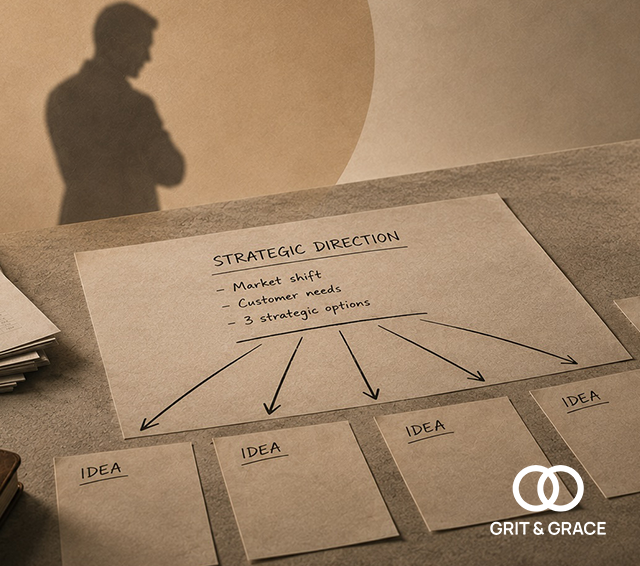
The CEO Who Wanted More Challenge but Always Spoke First
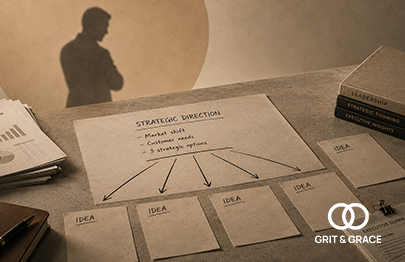
Daniel had spent years building what many leaders aspire to create: a high-performing executive team built on trust rather than politics. Yet despite encouraging open discussion and inviting disagreement, strategy meetings increasingly produced incremental rather than breakthrough ideas. During coaching, one seemingly ordinary question revealed why.

Innovation Isn't a Creativity Problem. It's a Leadership Problem
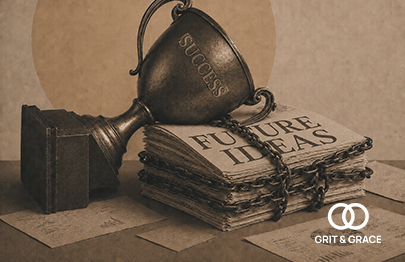
Organisations often search for innovation in the wrong place. They invest in brainstorming techniques, creativity workshops, and new technologies while overlooking the behavioural conditions that determine whether original thinking can emerge at all. The question is rarely whether organisations have enough ideas. More often, it is whether leadership creates an environment where those ideas are allowed to develop before they are judged.

Innovation Isn't a Creativity Problem. It's a Leadership Problem
Organisations often search for innovation in the wrong place. They invest in brainstorming techniques, creativity workshops, and new technologies while overlooking the behavioural conditions that determine whether original thinking can emerge at all. The question is rarely whether organisations have enough ideas. More often, it is whether leadership creates an environment where those ideas are allowed to develop before they are judged.

When Every Idea Becomes a Project Too Soon
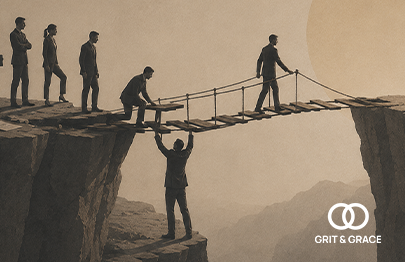
A Head of Strategy becomes increasingly frustrated with quarterly strategy sessions that consistently produce action plans but very little new thinking. What initially appears to be an innovation problem reveals something else entirely: a leadership team that has become exceptionally good at execution while unintentionally limiting exploration.
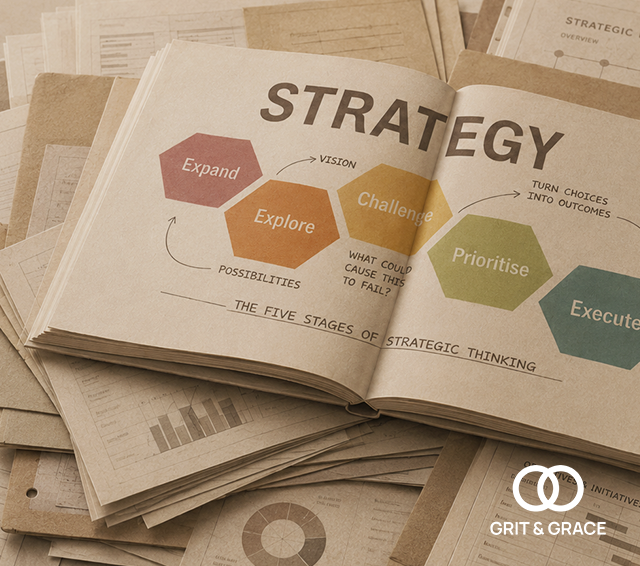
The Missing Process Behind Better Strategic Thinking
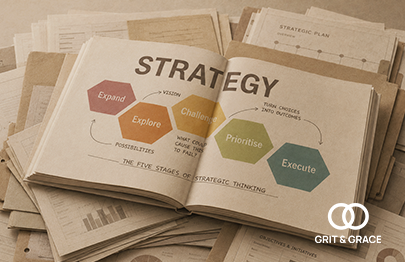
Strategy brainstorming sessions produce detailed plans without generating meaningful strategic insight. Let’s explore why strategic conversations often become operational conversations, the difference between divergent and convergent thinking, the five stages of strategic thinking, and the role leaders play in protecting the process long enough for better ideas to emerge.